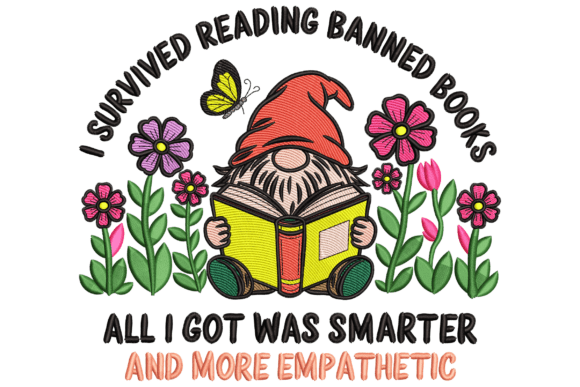
Banned Books Gnome: A Designer's Review for Small Business Merch
As an embroidery designer who spends countless hours digitizing and testing files for commercial use, I approach every new machine embroidery design with a critical eye. It is not just about whether a file looks cute on a screen; it is about how that digital embroidery file translates into a tangible finished product that builds brand value. Today, I am reviewing the Banned Books Gnome, a design that immediately caught my attention for its potential in the small business merchandise market. While the product category lists it under School, my assessment focuses on its versatility for boutiques, creative studios, and independent brands looking to make a statement.
First Impressions: Whimsy Meets Professionalism
The first thing you notice about the Banned Books Gnome is its personality. The description promises a "dash of charm" and a "playful and whimsical touch," and visually, it delivers. In the current market, where consumers crave authenticity and handmade vibes, this design hits the sweet spot between fun and professional. It does not feel like a generic clip-art conversion; rather, it feels like a deliberate piece of art suitable for a handmade product line. For businesses in the literary, educational, or creative sectors, this imagery speaks directly to a niche audience that values freedom of expression and storytelling. The aesthetic is friendly yet bold enough to serve as a focal point on various garments.
Real-World Applications for Brand Identity
When evaluating a design for commercial embroidery, I always ask: "Where does this live on a garment?" The Banned Books Gnome is surprisingly versatile. For a local bookstore or a literacy non-profit, this design is perfect for staff uniforms. Imagine it embroidered on the chest of a denim apron in a cozy café that doubles as a reading nook. The whimsical nature of the gnome softens the uniform, making staff appear approachable and engaging to customers.
Beyond uniforms, this design shines as an embroidered patch. Patches are a massive trend in small business merch right now. You could produce a run of these gnomes on twill backing and sell them as collectibles at craft fairs or include them as a free gift with purchase to boost customer loyalty. The design also works exceptionally well on tote bags. A canvas tote bag design featuring this character adds immediate value to a simple bag, turning it into a statement piece that customers will carry around town, effectively becoming walking billboards for your brand.
For those running an Etsy shop or a custom apparel business, this file offers excellent potential for custom apparel. It can be scaled down for a sleeve detail on a hoodie or placed centrally on a t-shirt. The key here is how the design affects brand identity. Using such a specific, character-driven image helps create visual consistency. If your brand voice is quirky, intellectual, and warm, the Banned Books Gnome reinforces that message better than a standard text logo ever could.
Technical Considerations for Production
While the artistic merit is high, a professional review must address the technical execution. The description mentions suitability for t-shirts, towels, and home decor, which implies a certain level of detail. However, when moving to cap embroidery or small patches, caution is required. Caps have curved surfaces and limited space. If the Banned Books Gnome contains fine details or tiny lettering, it may not stitch out cleanly on a structured cap front without significant digitizing adjustments. I recommend testing the design at the smallest intended size before committing to a large production run.
Stitch density is another critical factor. Designs with a "whimsical" style often utilize varied stitch angles to create texture. While this looks beautiful, high density can lead to fabric puckering, especially on lighter materials like poly-cotton blends used for work shirts. Always check the thread colors specified in the file. If the design relies on subtle shading, ensure your thread inventory matches the digital preview to maintain the intended look. Furthermore, the choice of stabilizer cannot be overlooked. For a design that might be used on towels or textured fabrics, a cut-away stabilizer is likely necessary to prevent distortion over time, especially if the item will undergo frequent washing.
It is also vital to verify the hoop size requirements. The product description does not specify exact dimensions, so you must check the file properties before hooping. Trying to force a large design into a small hoop can ruin both the garment and the machine. Additionally, consider the fabric texture. This design might get lost on highly textured fleece or looped towels unless the stitch count is substantial enough to pop against the background.
Enhancing Customer Trust and Product Value
In the world of handmade brands and boutique retail, perception is reality. A high-quality embroidery job signals professionalism. When a customer sees a crisp, well-executed Banned Books Gnome on a product, it increases their trust in the maker. It suggests that attention was paid to every detail, from the thread tension to the color selection. This perceived quality allows businesses to command higher price points. A plain tote bag sells for a few dollars; a tote bag featuring a unique, well-stitched character design can sell for three or four times that amount.
Moreover, this design fosters buyer engagement. In an era of mass-produced goods, items that feature unique characters stand out. They invite conversation. A customer wearing a shirt with this gnome is likely to get asked about it, providing an organic opportunity for word-of-mouth marketing. For event merch, such as a library fundraiser or a school book fair (fitting the School category), this design creates a sense of community and shared interest among attendees.
Essential Designer Notes for Success
Before you load this embroidery file into your machine for a client order, follow these practical steps to ensure success:
- Test in Black and White: Print a grayscale version of the design to check contrast. Ensure the outlines are distinct even without color.
- Verify Small Scale Legibility: Stitch a sample patch at the minimum size you intend to use to confirm details do not merge.
- Review Thread Contrast: Make sure your chosen thread colors provide enough separation between the gnome, the books, and the background fabric.
- Inspect Spacing: Look for areas where stitches might be too close together, which can cause thread breaks or bird nesting.
- Confirm Hoop Size: Double-check that your frame accommodates the design dimensions without re-hooping.
- Test on Real Fabric: Never rely solely on digital simulations. Stitch on the actual material you plan to sell.
- Use Proper Stabilizer: Match your stabilizer weight to the fabric type to prevent shifting or puckering.
- Create a Printable Mockup: Generate a realistic mockup for client approval to manage expectations regarding placement and size.
- Compare Design Assets: Ensure this design complements your existing logo and other design assets for a cohesive brand look.
- Check Licensing: Confirm the commercial licensing terms before using the design for resale or branded merchandise.
The Banned Books Gnome is more than just a decorative element; it is a strategic asset for businesses looking to inject personality into their products. Whether used for apron embroidery in a bakery, a patch for a literary club, or a standout feature on a line of custom tees, this design offers a blend of charm and utility. By paying attention to the technical details of stitch density, fabric compatibility, and sizing, you can leverage this whimsical character to elevate your brand and delight your customers.